Petrol rationing in the United Kingdom
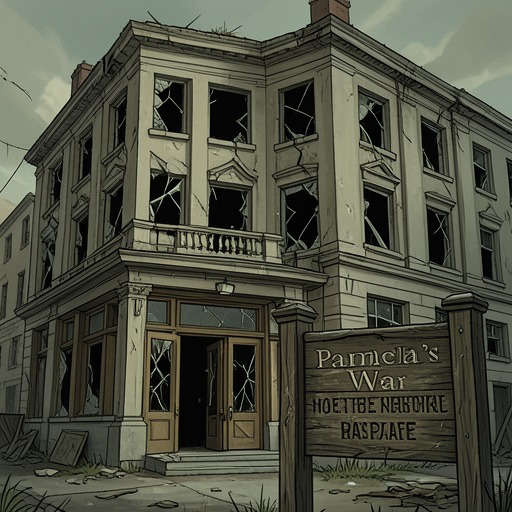
Pamela's WarPetrol rationing in the United Kingdom is the wartime restriction that made fuel a strategic resource rather than an ordinary consumer commodity. Its progressive severity reached far beyond the petrol station: it curtailed private movement, altered the geography of leisure, increased the force of official surveillance, and helped undermine the rural business on which the narrator’s family depended.
Introduction and Wartime Purpose
Petrol became limited almost immediately when war was declared, and the rules governing its use were described as draconian. The restriction reflected the broader wartime demand that transport be reserved for essential, public, and military purposes. A private journey was no longer simply a matter of personal choice; the use of a vehicle could be judged against the national emergency.
The effect was visible in the changing pattern of life around The Woodman Hotel. With fewer customers able to drive and very few people within walking distance, the remaining visitors received considerably more attention than they would have done before the war. The hotel’s trade had previously depended almost entirely on the motorcar, so rationing converted distance from a minor inconvenience into a decisive economic barrier.
Escalation and Enforcement
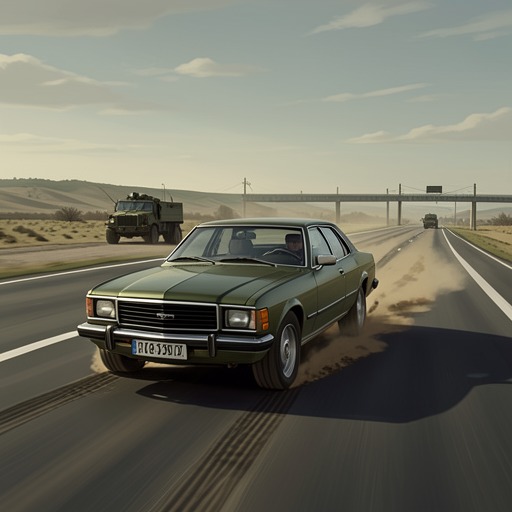
In the early months, people trying to preserve some sense of normality managed to eke out their allowances. One small economy was to switch off a car engine at the top of a hill and coast for a considerable distance, saving fuel through ingenuity. Such expedients belonged to an initial period when limited private motoring remained possible. As the war continued, however, a leisurely drive into the countryside for a drink became an unacceptable frivolity, and anyone caught breaking the rules could face severe trouble, including imprisonment.
By 1942, no petrol was available at all for the general populace. Only emergency and public vehicles, together with vehicles directly involved in the war, remained on the roads. The restriction therefore did not merely reduce discretionary travel; it effectively removed private motoring from everyday life. Cars were locked away until the war ended, while performers who had once stayed at The Woodman Hotel had to find accommodation nearer the theatres where they worked.
The scarcity also interacted with other controls imposed on vehicles. Under the wartime vehicle immobilisation rule, no vehicle was supposed to be left overnight without its engine being disarmed: the rotor arm had to be removed so that an invading army could not readily use the car. One night shortly after eleven o’clock, the local policeman inspected the cars in the hotel car park and found that Mr Hood’s vehicle had an unlocked near-side door and still had its rotor arm in place. Because almost any key could start almost any engine, the breach was treated as a serious offence. The possible fine was £100, although the magistrates reduced Mr Hood’s penalty to £10 because the rule was not yet generally known at that early stage of the war.
Transport, Distance, and the Hotel
The Woodman Hotel was particularly vulnerable because of its location. It stood at least two miles from the nearest village and three or four miles from the nearest market town; both places had their own hostelries that local people could reach on foot. The hotel therefore had little passing trade to fall back on. Only the most energetic visitors would attempt the journey by walking or cycling, and after dark the blackout made the roads dangerous, with the risk of being run over by one of the few vehicles still travelling.
A possible railway connection had once been planned for Clent, close to The Woodman Hotel. During the war, that absent railway became an especially painful counterfactual. Trains continued to operate day and night, carrying troops across the country without suffering the same cuts as road transport. Had the line existed, it might have brought customers and helped the business survive; without it, the hotel remained dependent on a form of movement that wartime policy was steadily eliminating.
Bus services offered little compensation. Apart from buses carrying workers to and from their jobs, there were few services to catch, and evening schedules were dramatically curtailed to save petrol. The result was a countryside almost emptied of casual travellers: there was no passing trade, little evening mobility, and no practical transport alternative capable of reconnecting the isolated hotel with its former customers.
Petrol Rationing within the Emergency State
Fuel rationing formed part of a wider system in which ordinary actions were recast as matters of security. The police station stood directly opposite the hotel, and strict licensing laws made the family’s livelihood dependent on compliance with permitted drinking hours. The staff nevertheless used the elevated bar to watch the station’s top sash window: when the Sergeant put on his helmet, they knew that an inspection was approaching and could close down the bar in time. This improvised warning system shows how official regulation entered the smallest routines while customers and proprietors tried to negotiate its demands.
The same emergency logic shaped the blackout. Two days after war was declared, street lights were extinguished, car headlights and reflectors were painted over, and prosecutions followed non-compliance. A match lit outdoors could bring a fine of 10 shillings at the start of the war, later rising to £1 10 shillings; lighting two matches could result in a £2 fine. Blackout curtains and blinds were obligatory, and wardens enforced the rule that no light could show when an outside door was opened. In such conditions, the fuel restriction did not operate alone: even a journey that remained technically possible became hazardous because darkness concealed ponds, canals, ditches, vehicles, and pedestrians.
The policy also encouraged suspicion of anything that might assist an enemy using the roads or skies. A German maid was jailed after continuing to open and close curtains at night despite warnings, while a white-painted flat roof was suspected of being a signal to bombers or a marker for parachutists. The local Home Guard, led by the narrator’s Father, reported a nearby group of Germans to the Home Office, prompting a rapid police operation and their removal for internment. These episodes reveal the atmosphere in which rationing was understood: movement, light, vehicles, and foreign identity could all be drawn into the same language of security and potential threat.
Consequences and Significance
The immediate consequence of petrol rationing was a contraction of mobility, but its deepest consequence was social and economic. The policy separated people from places that had previously been easily reached, narrowed the radius of leisure, and made a rural hotel dependent on customers who could no longer legally or practically travel there. The family could conserve, adapt, and wait, but the structural problem was that the business had been built around the motorcar and the motorcar had become unavailable.
Rationing also turned travel into a moral test. A journey for work, emergency, or war service could be justified; a drive for pleasure risked condemnation and punishment. The distinction reorganised everyday behaviour around national necessity, making self-denial part of responsible citizenship while exposing private businesses whose survival depended on discretionary consumption.
By the time petrol disappeared entirely from general use in 1942, the change had become more than a temporary inconvenience. It had remade the local landscape, emptied roads, curtailed buses, strengthened police authority, and helped make The Woodman Hotel’s eventual failure unavoidable. Petrol rationing thus stands in the narrative as both a practical wartime rule and a mechanism through which the war reached into household income, leisure, geography, and the family’s hopes of keeping its home and livelihood afloat.